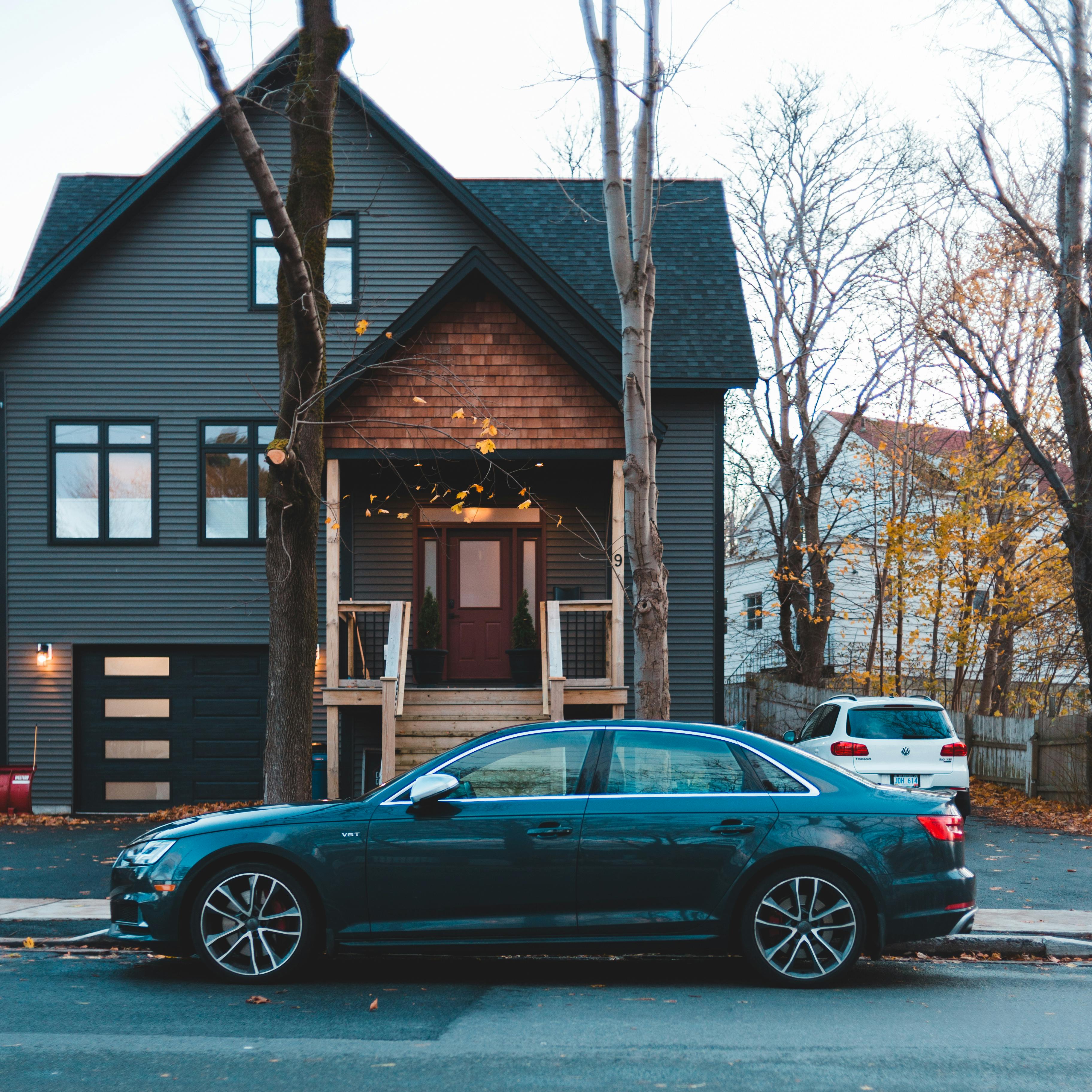
Bundling home and auto coverage can simplify account management, create opportunities for package discounts, and make it easier to review your protection in one place. The Firebird Agency helps clients compare options across trusted carriers so coverage and pricing stay aligned with the way you actually live.
Why Combine Home and Auto?
Placing both policies together can make renewals cleaner, reduce gaps in coverage, and give you one point of contact when you need service. It also gives us a better view of your overall risk profile so we can recommend stronger protection for your property, vehicles, liability exposure, and deductible strategy.
Home Coverage
Home insurance helps protect the structure of your home, detached structures, personal property, and liability exposures. Additional options can be reviewed for higher-value homes, water backup, scheduled property, loss assessment, and other needs that do not always fit standard coverage automatically.
Auto Coverage
Auto insurance can include liability, comprehensive, collision, uninsured and underinsured motorist coverage, medical payments, rental reimbursement, roadside assistance, and more. We help you balance limits and deductibles so the policy reflects both legal requirements and your actual financial exposure.
How We Help
We compare markets, explain tradeoffs clearly, and help you build a practical package instead of forcing separate decisions in a vacuum. If you are buying a new home, reviewing your current insurance, or trying to improve pricing at renewal, we can help structure a cleaner home and auto solution.
Home & Auto FAQ
What is homeowners insurance and what does it cover?
Homeowners insurance is a policy that provides financial protection for your home, personal
belongings, and liability in the event of an accident or disaster. A standard policy typically includes:
Dwelling Coverage (repairs/rebuilds your home's structure after a covered peril such as fire, wind,
or hail); Personal Property Coverage (replaces belongings like furniture, electronics, and clothing
if they are stolen or damaged); Liability Coverage (protects you if a guest is injured on your
property or you accidentally damage someone else's property); Loss of Use Coverage (pays for
temporary housing and living expenses if your home becomes uninhabitable); and Medical
Payments Coverage (covers minor medical bills for guests injured on your property, regardless of
fault).
Is homeowners insurance required by law?
Homeowners insurance is not required by state law; however, if you have a mortgage, your
lender will almost certainly require you to carry it as a condition of your loan. Even if you own your
home outright, having coverage is strongly recommended to protect one of your most valuable
assets from unexpected losses.
What is a deductible, and how does it work?
A deductible is the amount you pay out of pocket before your insurance company covers the
rest of a claim. For example, if a storm causes $5,000 in damage and your deductible is $1,000,
your insurer pays the remaining $4,000. Standard deductibles typically range from $500 to $2,000,
though they can be higher. Some policies also have percentage-based deductibles for specific
perils like wind or hail. Generally, choosing a higher deductible lowers your premium, while a lower
deductible means a higher premium.
What is NOT covered by a standard homeowners insurance policy?
Standard homeowners policies do NOT cover flood damage, earthquake damage, normal wear
and tear, faulty workmanship or construction defects, mold caused by neglect or poor
maintenance, or the cost to repair the actual plumbing or appliance that caused water damage
(though resulting water damage may be covered). Flood and earthquake coverage must be
purchased as separate policies. For high-value items like jewelry, fine art, or collectibles, you may
need a scheduled endorsement or floater to be fully covered.
Does homeowners insurance cover floods and earthquakes?
No — flood and earthquake coverage are not included in a standard homeowners policy. Flood
insurance is typically purchased through the National Flood Insurance Program (NFIP) or a private
flood insurer. Earthquake insurance can be added as a separate policy or endorsement. If you live
in a flood zone or earthquake-prone area, we strongly recommend adding these coverages.
Please contact us to discuss your options.
How much homeowners insurance do I actually need?
You should carry enough coverage to fully rebuild your home from the ground up at current
construction costs — this is known as the replacement cost value, which can differ significantly
from the market value of your home. Your personal property limit is typically set at 50–70% of your
dwelling coverage. For liability, most experts recommend at least $100,000, though $300,000 or
more is common. An umbrella policy can provide additional liability protection. We can help you
evaluate your needs and make sure you are not underinsured.
Will renovations or home improvements affect my coverage?
Yes. Any significant addition or upgrade — such as adding a room, finishing a basement,
installing a new kitchen, or adding a pool — changes your home's replacement cost and therefore
your coverage needs. You should notify your insurance agent any time you make a major
improvement. Failing to update your policy could leave you underinsured in the event of a claim.
How do I file a homeowners insurance claim?
In the event of damage or loss: (1) Ensure the safety of everyone in your household. (2)
Prevent further damage where safely possible (e.g., cover a broken window). (3) Document all
damage with photos and videos. (4) Contact your insurance company or agent as soon as
possible to report the claim. (5) A claims adjuster will be assigned to evaluate the damage. (6)
Keep records of all related expenses, receipts, and communications. The more documentation
you have, the smoother the claims process will be.
Will filing a claim raise my premium?
Filing a claim may result in a higher premium at renewal, particularly if you have filed multiple
claims in the past several years. Before filing, consider whether the damage amount is
significantly above your deductible. Small claims that are only slightly above the deductible may
not be worth filing if you are concerned about a premium increase. When in doubt, contact your
agent to discuss whether filing makes sense for your specific situation.
Does homeowners insurance cover my home-based business?
A standard homeowners policy generally provides very limited or no coverage for business-
related equipment, inventory, or liability arising from a home-based business. If you operate a
business from home, you should discuss adding a home business endorsement or obtaining a
separate business owner's policy (BOP) to properly protect your business assets and liability.
What is auto insurance and why do I need it?
Auto insurance is a contract between you and your insurance company that protects you
financially in the event of an accident, theft, or other covered loss involving your vehicle. Almost
every state requires drivers to carry a minimum level of auto liability insurance. Beyond the legal
requirement, auto insurance protects you from potentially catastrophic out-of-pocket costs from
accidents, lawsuits, or vehicle damage.
What are the main types of auto insurance coverage?
The primary types of auto insurance coverage are: Bodily Injury Liability — pays for injuries you
cause to others; Property Damage Liability — pays for damage you cause to other vehicles or
property; Collision Coverage — pays to repair or replace your own vehicle after a collision,
regardless of fault; Comprehensive Coverage — pays for non-collision damage to your vehicle
such as theft, fire, vandalism, or weather events; Uninsured/Underinsured Motorist Coverage —
protects you if you are hit by a driver with no insurance or insufficient coverage; Personal Injury
Protection (PIP) — covers your medical expenses and sometimes lost wages after an accident;
and Medical Payments Coverage — helps pay medical bills for you and your passengers after an
accident.
What is the difference between liability and full coverage?
Liability-only insurance covers damage and injuries you cause to others but does NOT cover
damage to your own vehicle. 'Full coverage' — while not an official insurance term — generally
refers to a policy that combines liability, collision, and comprehensive coverage, protecting both
other parties and your own vehicle. Full coverage is typically required if you are financing or
leasing a vehicle. If your car is older and has a low market value, liability-only may be sufficient; if
you could not afford to replace your car out of pocket, full coverage is usually worth the higher
premium.
How much auto insurance coverage do I need?
At a minimum, you must carry whatever your state legally requires. However, state minimums
are often insufficient to cover the full costs of a serious accident. We recommend carrying liability
limits of at least 100/300/100 (meaning $100,000 per person, $300,000 per accident for bodily
injury, and $100,000 for property damage). If you have significant assets, you may want even
higher limits or an umbrella policy. We can help you find the right balance of coverage and
affordability.
What factors affect my auto insurance premium?
Your auto insurance premium is influenced by many factors, including: your driving record
(accidents and violations raise your rate); your age and experience (teen and young adult drivers
typically pay more); the make, model, and year of your vehicle; your location (urban areas with
higher traffic and crime typically have higher rates); how much you drive (annual mileage); your
credit score (in most states); your coverage limits and deductibles; and whether you bundle your
home and auto policies with the same insurer. Most carriers also offer discounts for safe driving,
good grades (for students), anti-theft devices, defensive driving courses, and more.
If I drive someone else's car and get into an accident, whose insurance covers it?
In most cases, the car owner's insurance is primary — meaning their policy responds first to
cover the accident. If the damages exceed the car owner's policy limits, your own auto insurance
may act as secondary coverage. Always get explicit permission before driving someone else's
vehicle, and understand that any claims may affect the owner's insurance record.
What should I do immediately after a car accident?
After an accident: (1) Check for injuries and call 911 if anyone is hurt. (2) Move vehicles out of
traffic if it is safe to do so. (3) Exchange names, contact information, driver's license numbers,
license plate numbers, and insurance information with all drivers involved. (4) Take photos of all
vehicles, the scene, and any visible damage. (5) Get contact information from any witnesses. (6)
File a police report if required or recommended. (7) Notify your insurance company promptly —
even if you don't plan to file a claim. Do NOT admit fault at the scene.
Does my auto insurance cover a rental car?
It depends on your policy. If you carry collision and comprehensive coverage on your own
vehicle, that coverage often extends to rental cars in a similar manner. However, rental car
companies also offer their own collision damage waivers (CDW). Some credit cards also provide
rental car coverage. Review your policy details or speak with your agent before renting a car so
you know exactly what is covered and can make an informed decision about purchasing additional
rental coverage.
Can I save money by bundling my home and auto insurance?
Yes — bundling your home and auto insurance with the same carrier is one of the most
common and effective ways to reduce your premiums. Most insurers offer a multi-policy discount
that can save you anywhere from 5% to 25% depending on the company. Bundling also simplifies
your insurance management, with a single point of contact for both policies and often a single
deductible in the event of a combined claim (such as a vehicle damaging your home). Contact us
to find out how much you could save by bundling.
What happens if I let my auto insurance lapse?
Driving without insurance is illegal in nearly every state and can result in fines, license
suspension, and vehicle impoundment. Additionally, a lapse in coverage — even for just a few
days — can cause insurers to classify you as a higher-risk driver, leading to higher premiums
when you reinstate coverage. If you are struggling to afford your premium, contact your agent
before the policy lapses — there may be options such as adjusting your coverage, changing your
deductible, or finding a more affordable plan.
PERSONAL UMBRELLA
This FAQ is for informational purposes only and does not constitute legal or insurance advice. Coverage terms, exclusions, and availability vary by insurer and state. Consult a licensed insurance professional at The Firebird Agency for guidance specific to your situation.
While our offices are located in Arizona and California, we are licensed all over the country.